Art in Conflict – Practice
With Art in Conflict – Practice, we have expanded our lecture series to include a practice-oriented format: Together with artists, thinkers, and activists, we develop workshops, readings, screenings, and other formats for exchange. The focus is on practical work – exploring, connecting, and gaining an understanding of global perspectives. Artistic methods are tested and discussed in (post-)conflict contexts. We ask questions such as: How do we create a space where methods can be shared, relationships can grow, and new alliances can emerge? How can we build trust across spaces and realities? What does a solidarity-based artistic practice look like today?
Art in Conflict – Practice #3 – Making Invisible Stories Visible
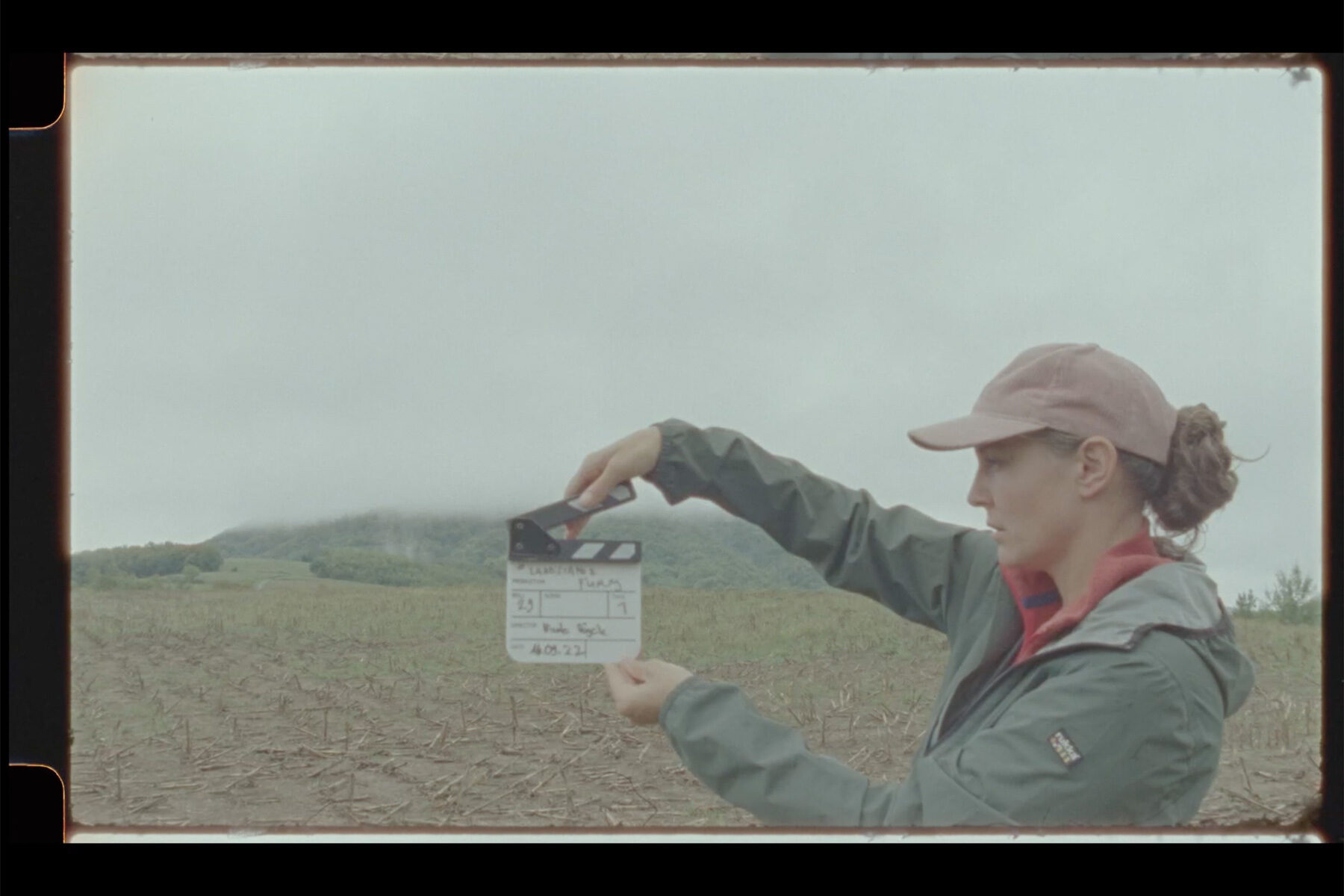
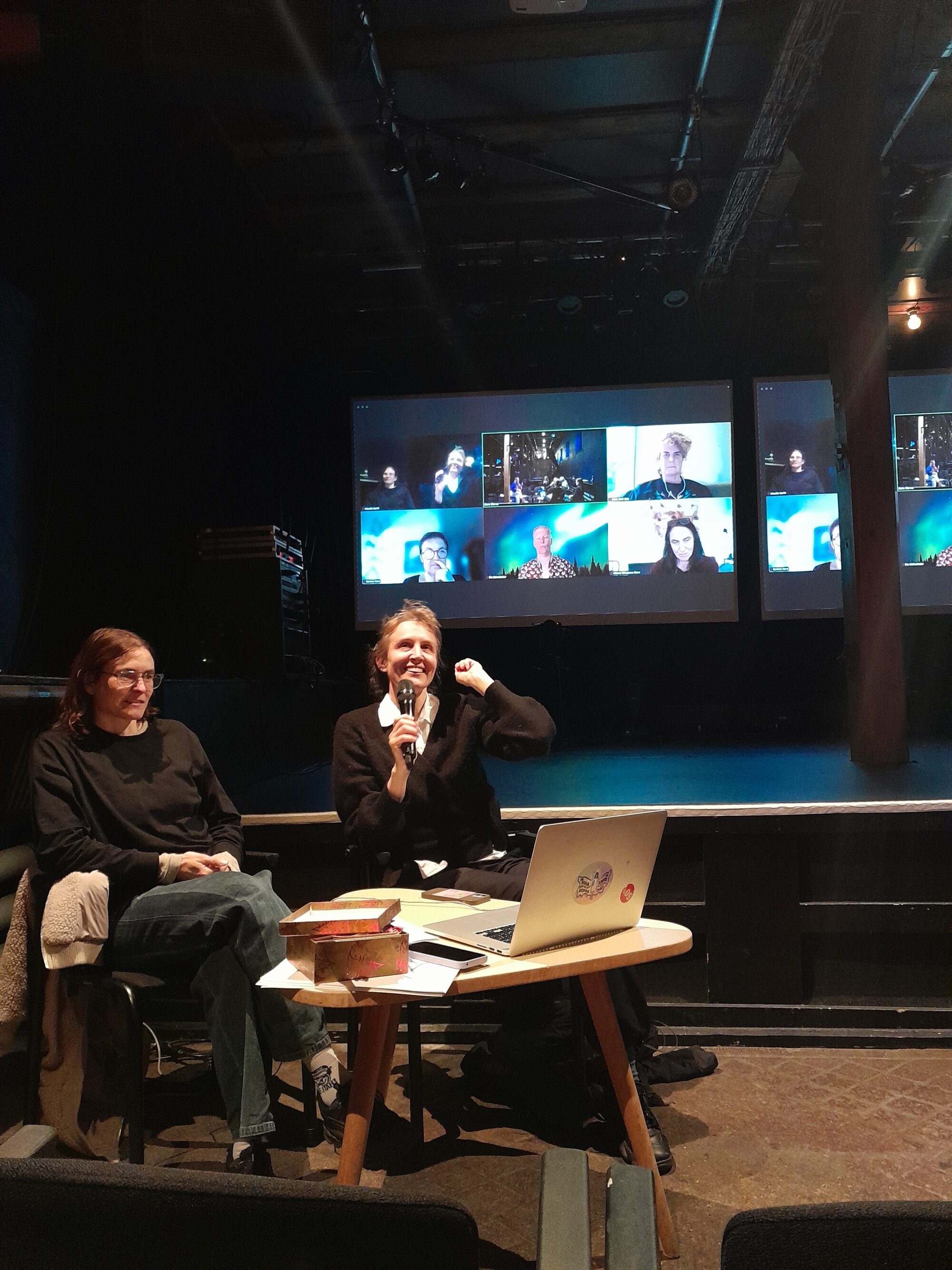
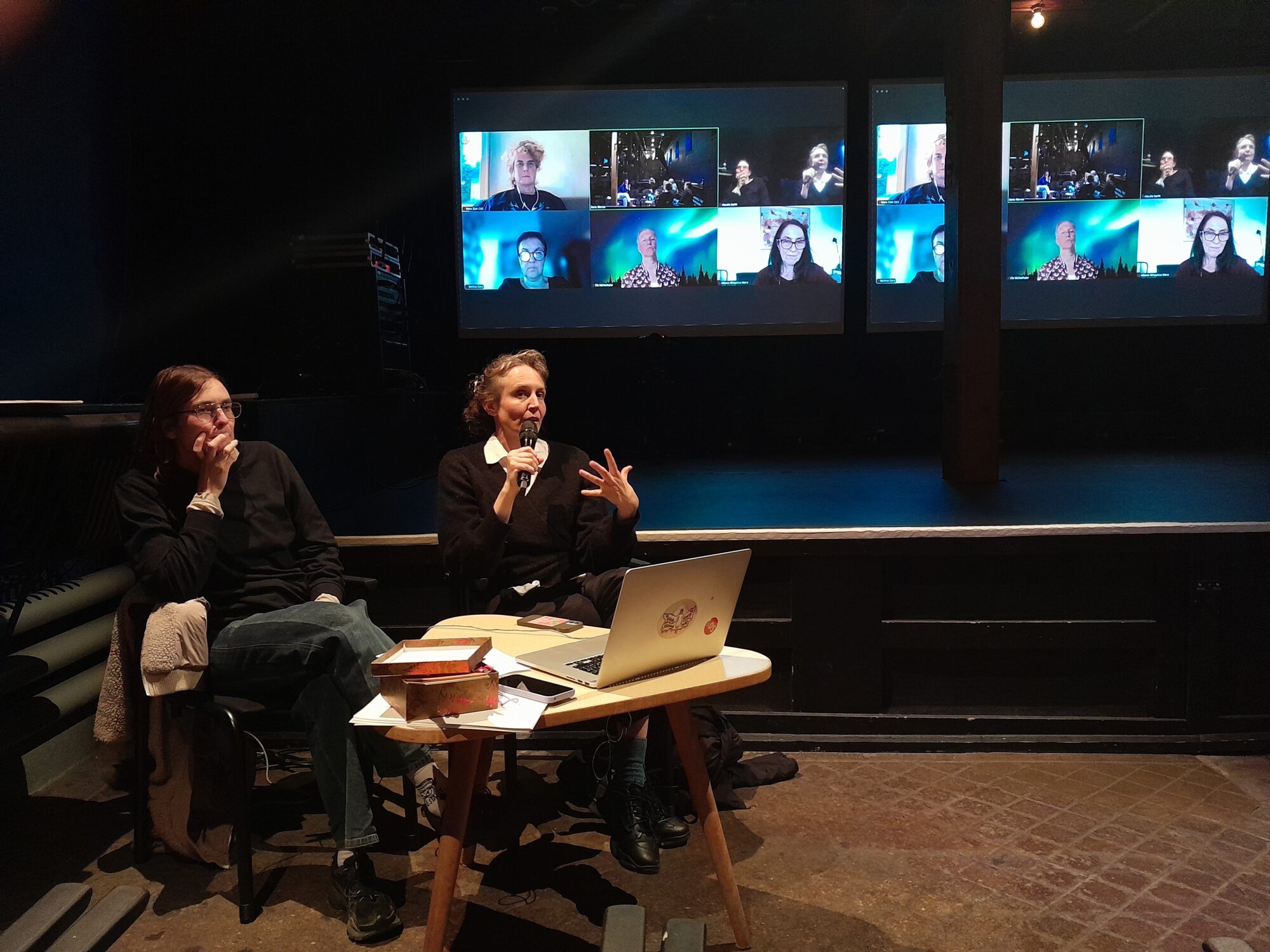
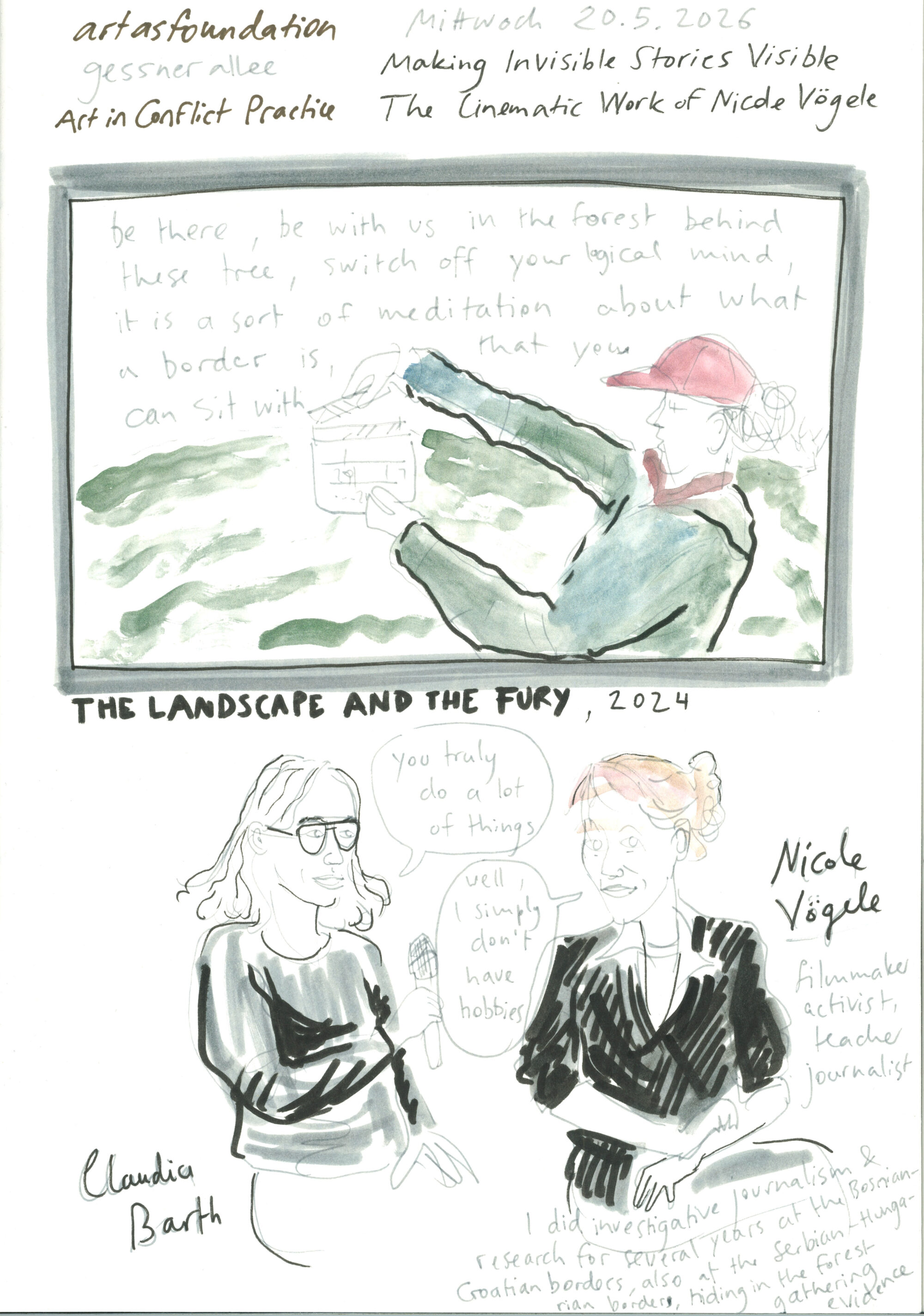
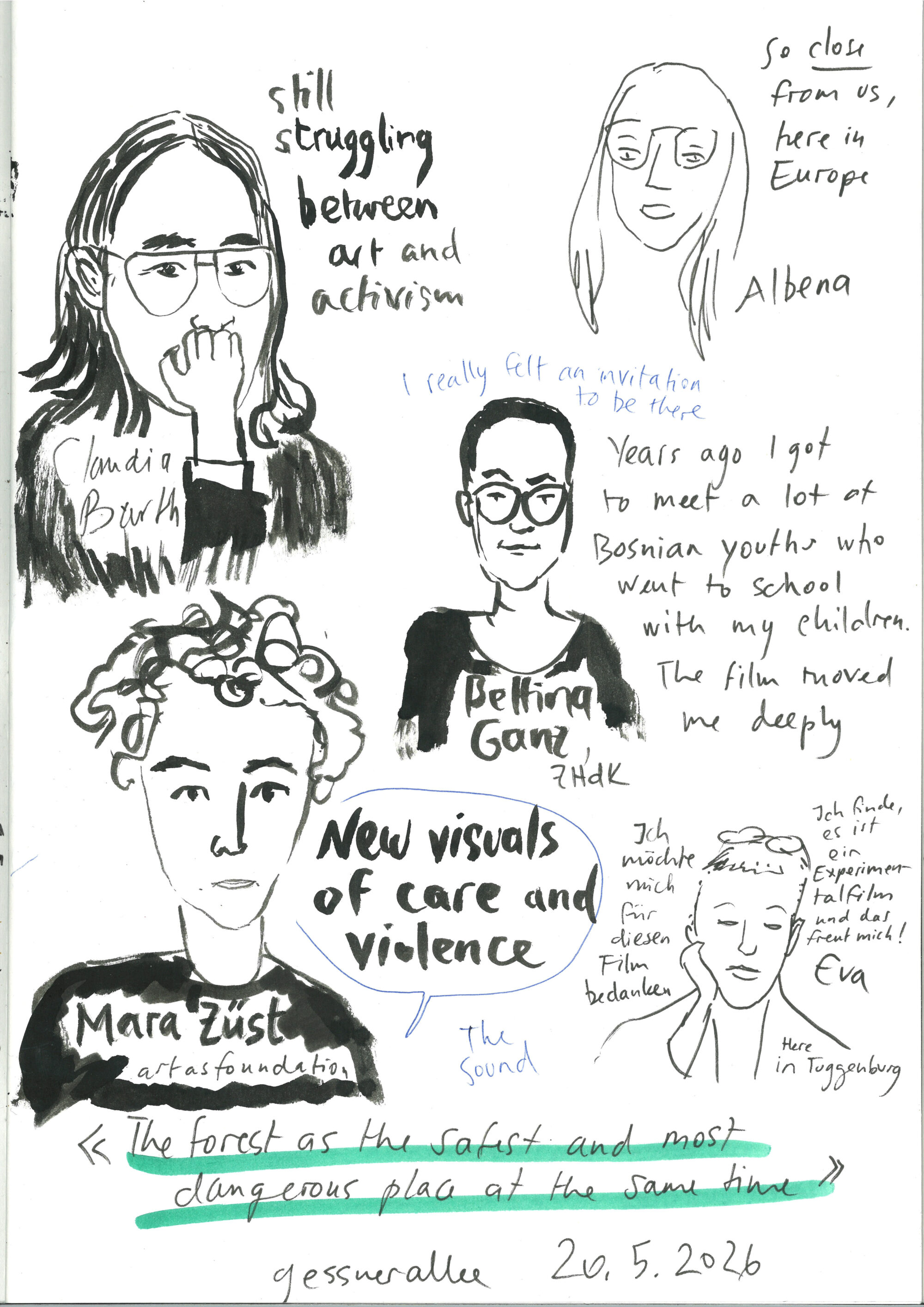
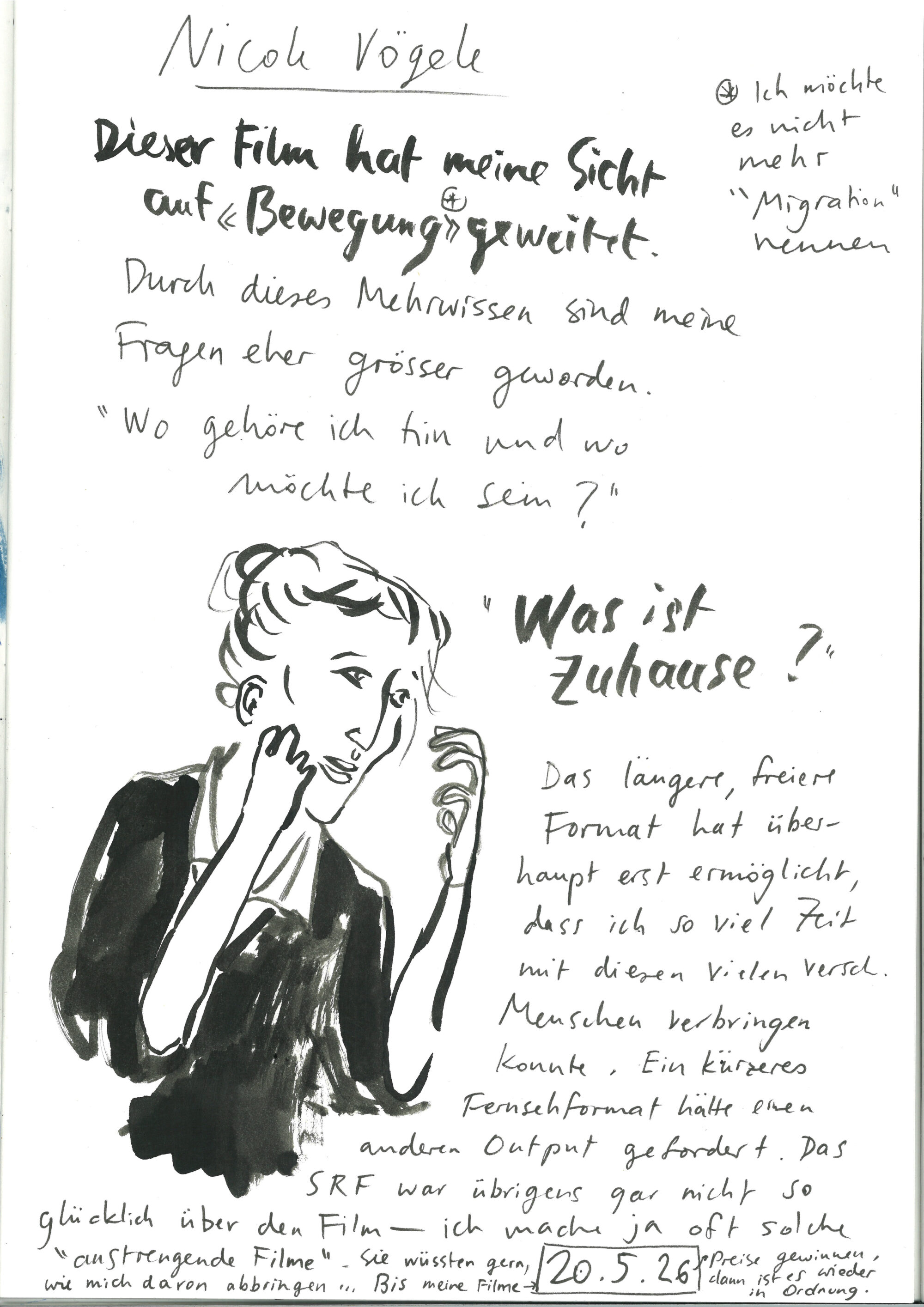
Film Screening and Talk: Making Invisible Stories Visible – The Cinematic Work of Nicole Vögele
With the screening of Landscape and the Fury by Nicole Vögele on 20. May 2026, a cinematic format was presented for the first time within the Art in Conflict – Practiceseries. The film was made in Ravnice in northwestern Bosnia – a region where landmines from the Bosnian war remain hidden to this day, while also forming part of a European external border. Despite this dense historical and political layering, it is the routines of everyday life and a lived sense of solidarity that shape the place.
Nicole Vögele accompanied the screening and invited the audience to keep a central question in mind while watching the film: “What is a border, really?” The film was shown both on site at the Gessnerallee theater and simultaneously streamed online.
Following the screening, participants were invited to a seven-minute “automatic writing” exercise – an individual writing practice without instructions, allowing anything that emerged in the moment to flow onto the page. Each participant then shared one word with the group: landscape, drone, scar, forest, darkness, noise, rumbling, silence – and recurring throughout: the forest…
In a striking way, the experience offered a powerful reminder of what art is capable of: it can reach layers of perception that are rarely accessible otherwise. Through her film, Nicole Vögele created a sensory experience, that engaged the participants on a physical, atmospheric and subconscious level – a quality characteristic of slow cinema.
The shared experience of the film exemplified how art, activism and social engagement can relate to one another without losing their respective approaches and modes of impact. The question of what art can do did not remain theoretical but became physically perceptible for each participant.
Place and Year
Zurich, 2026
Project Management
Claudia Barth (artasfoundation)
Mara Züst (artasfoundation)
Artistic documentation
Nastasia Louveau
Partner Organisations
Gessnerallee Zürich
Beauvoir Films
Mediathek HGK Basel FHNW
Financial Contribution
Canton of Zurich
Migros Culture Percentage
Art in Conflict – Practice #2 – A Collaborative Cookbook With Plants From the Labyrinthplatz
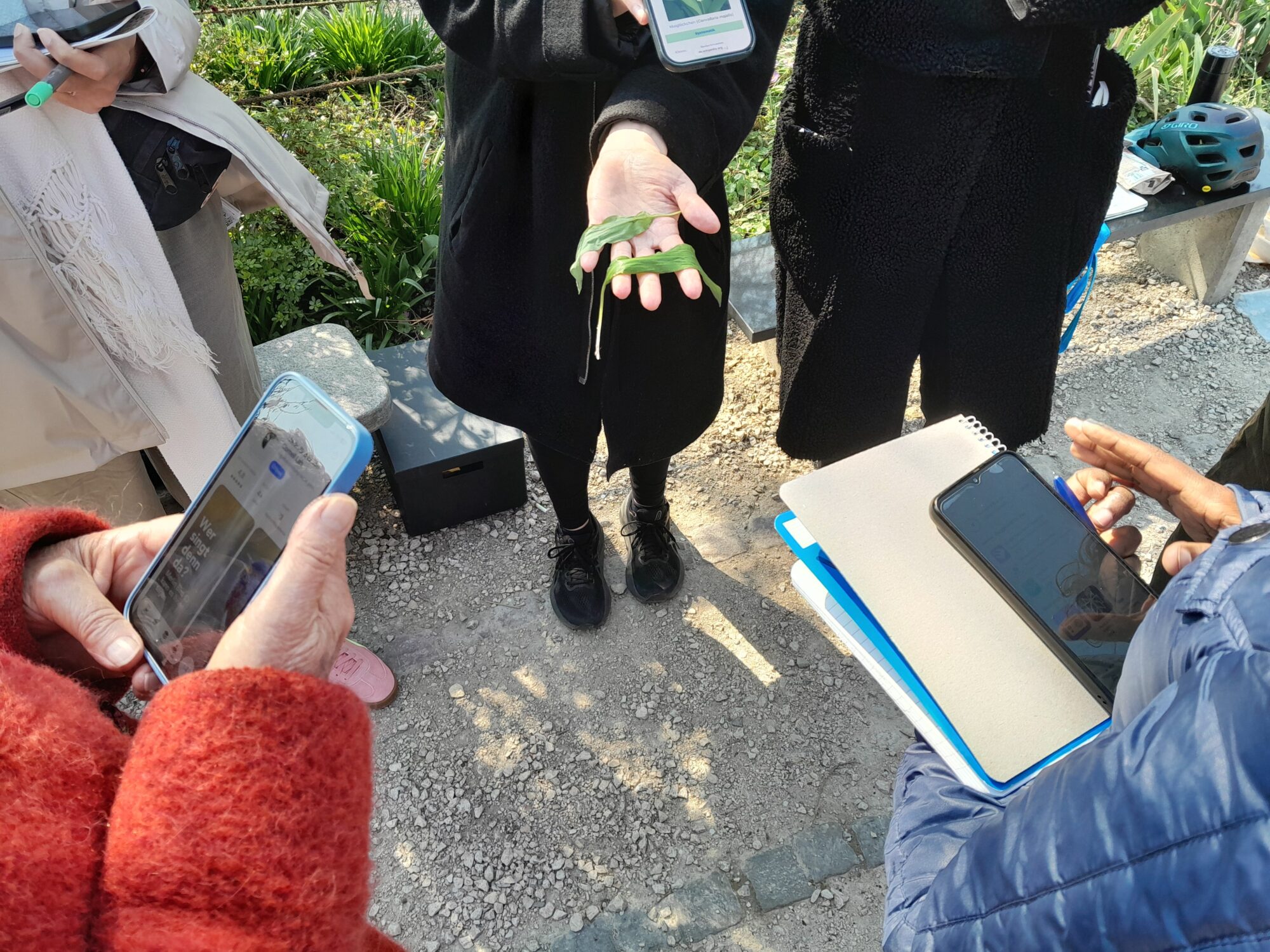
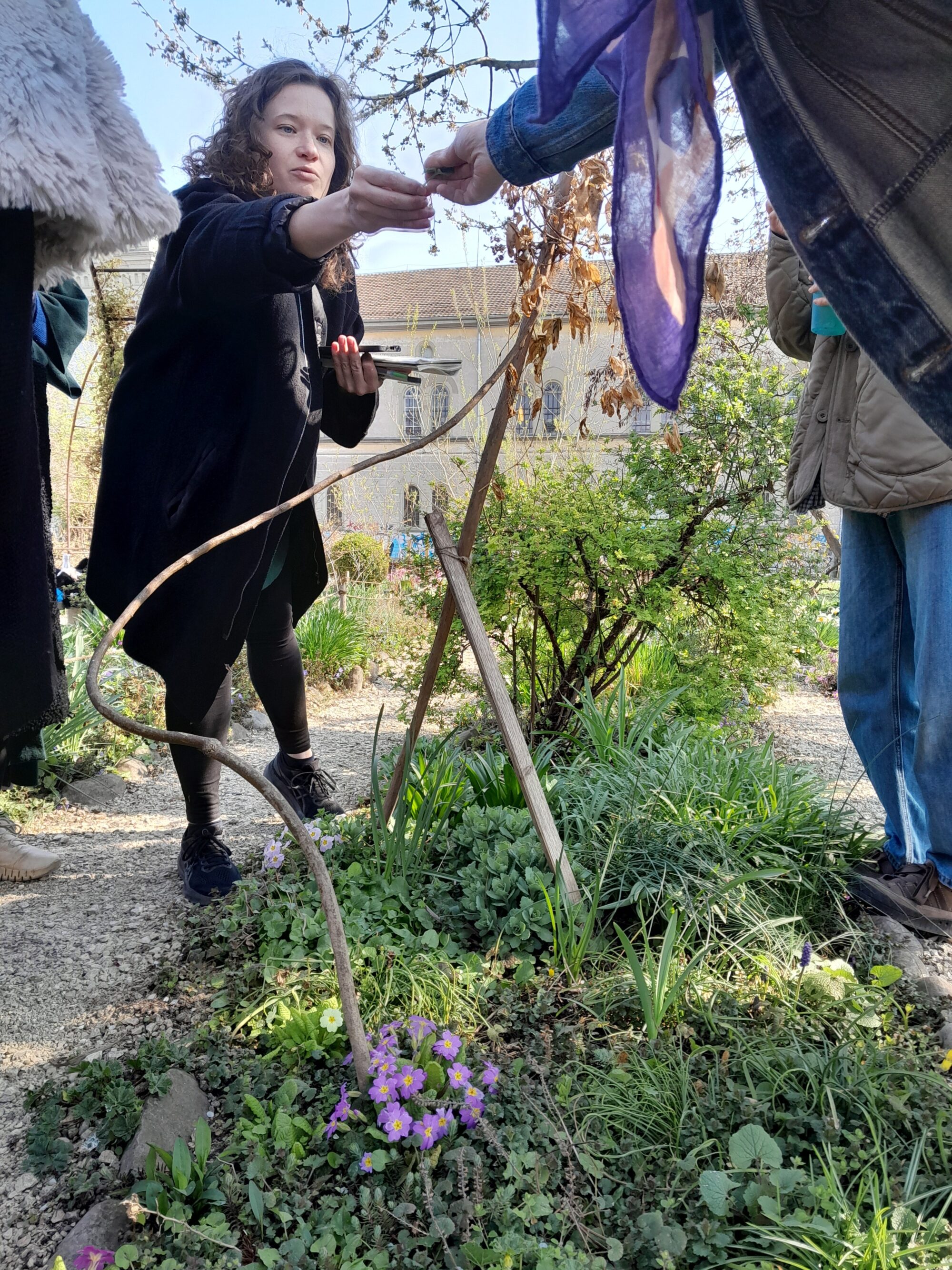
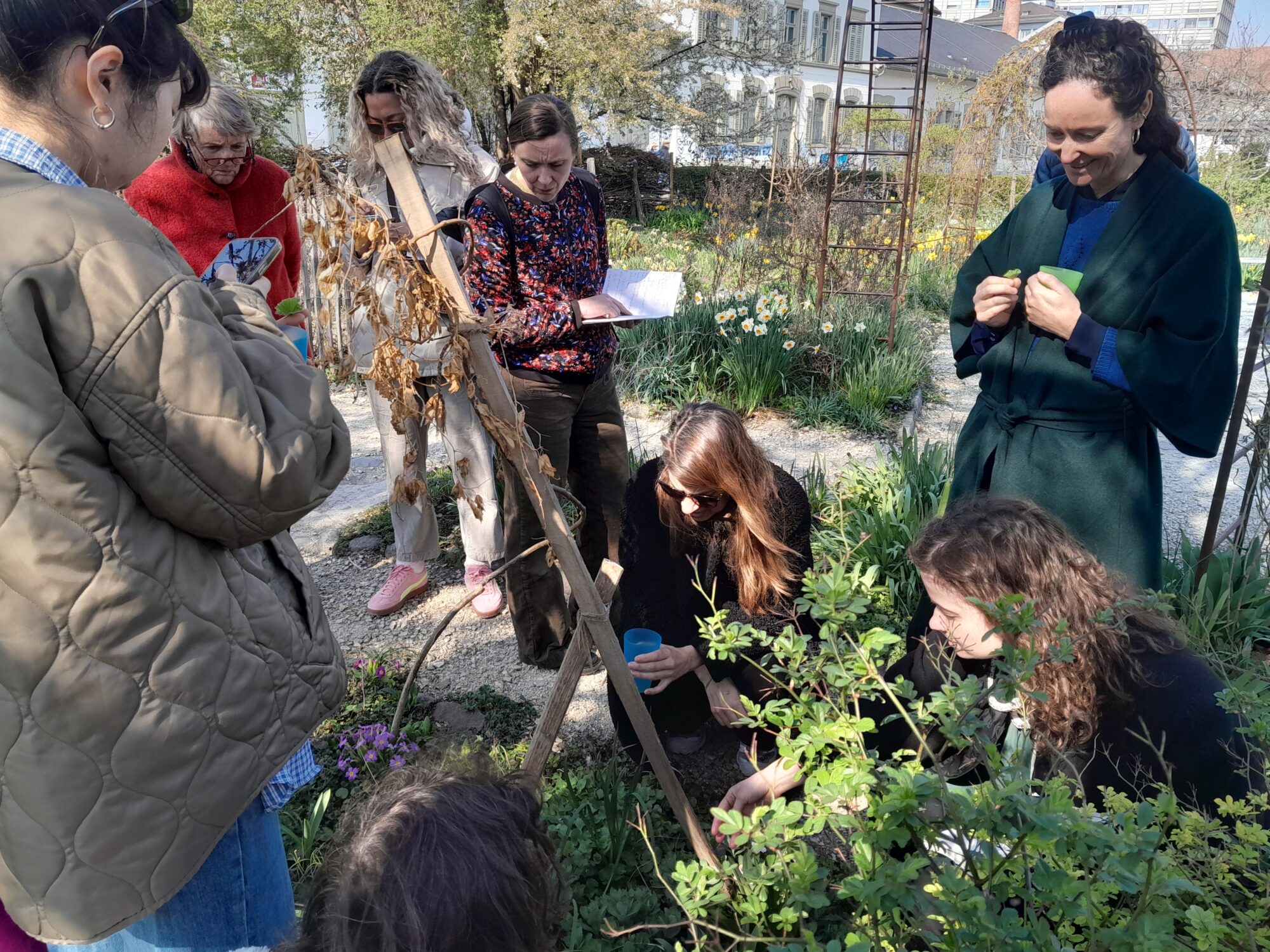
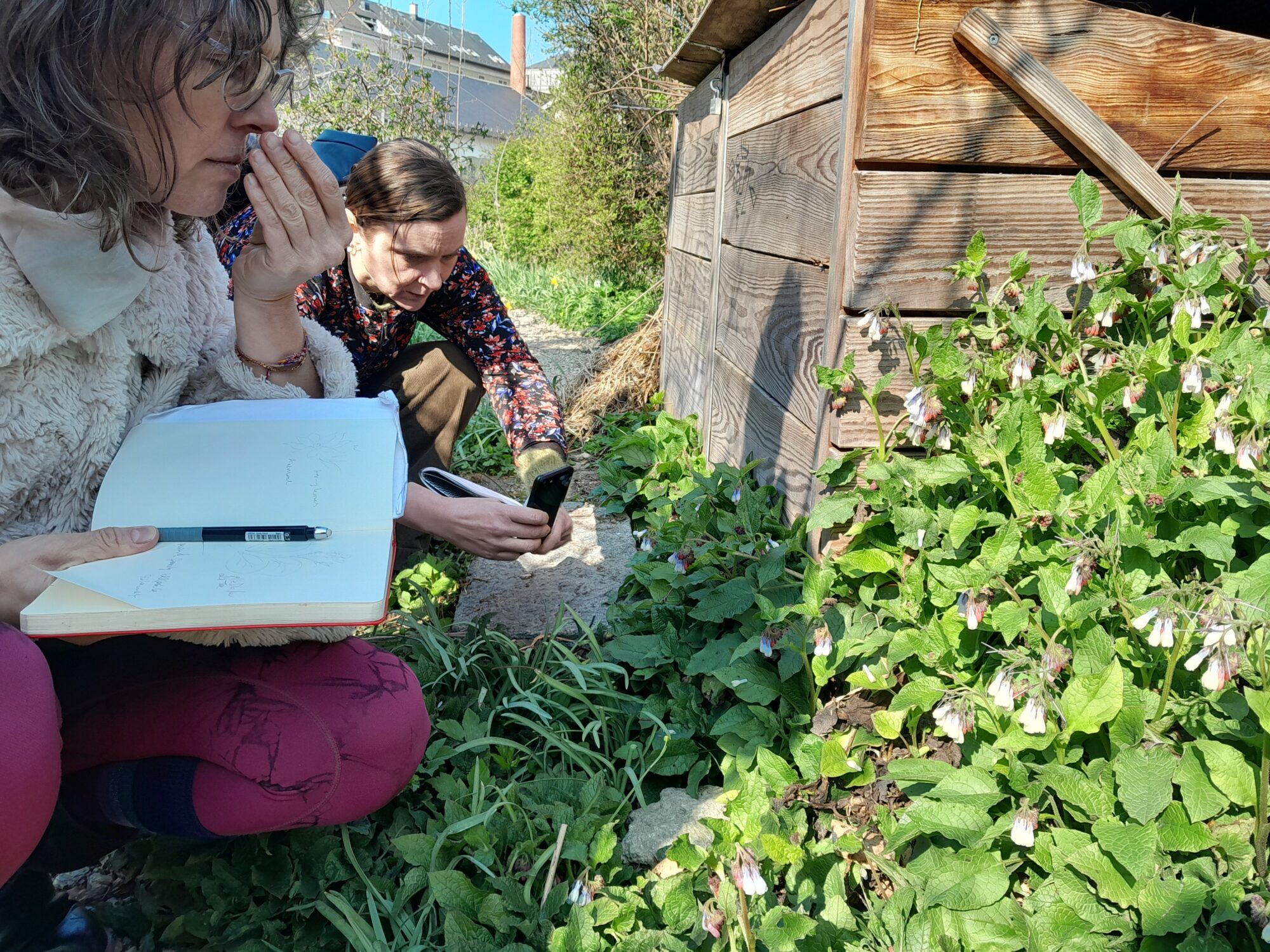
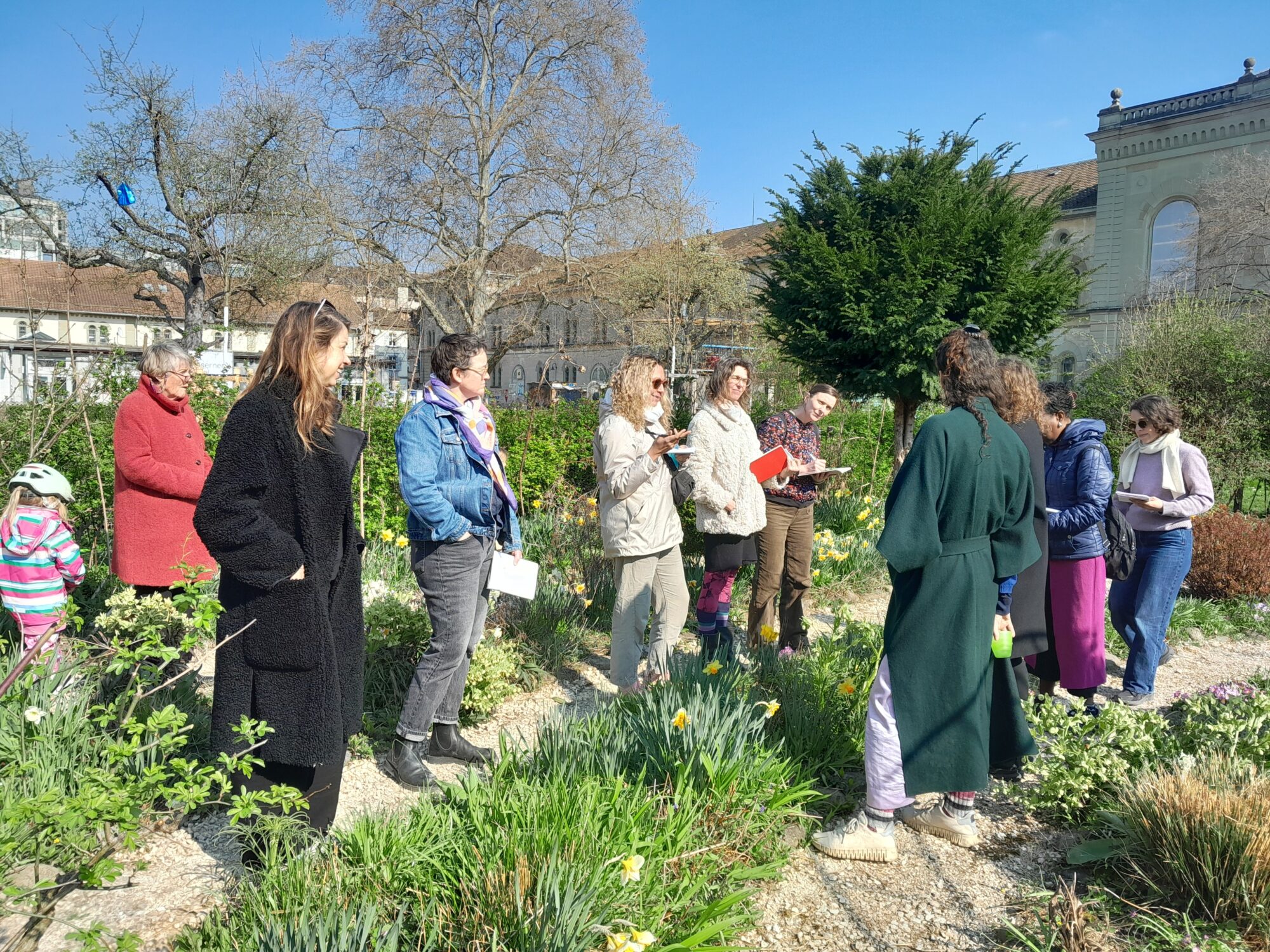
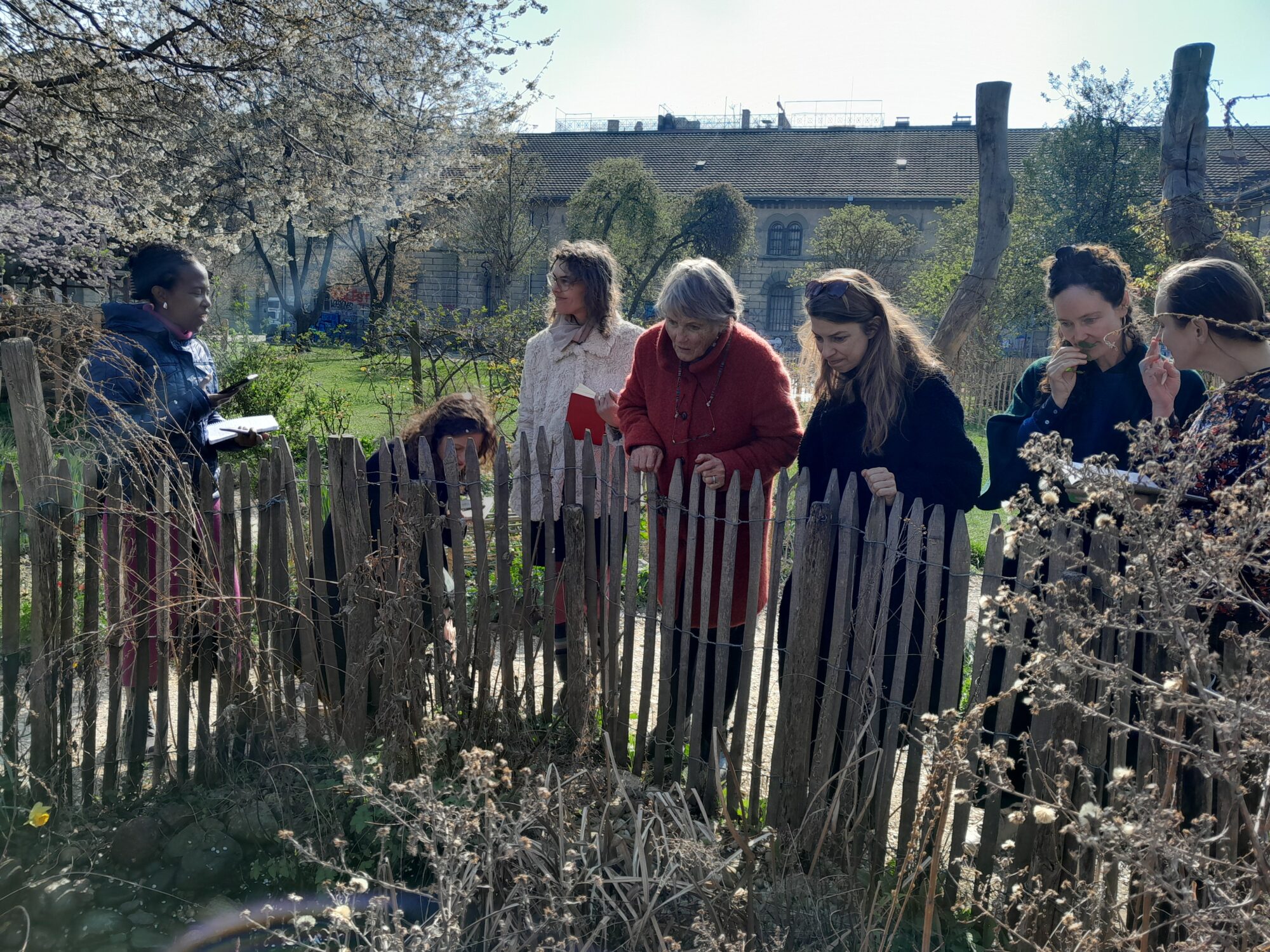
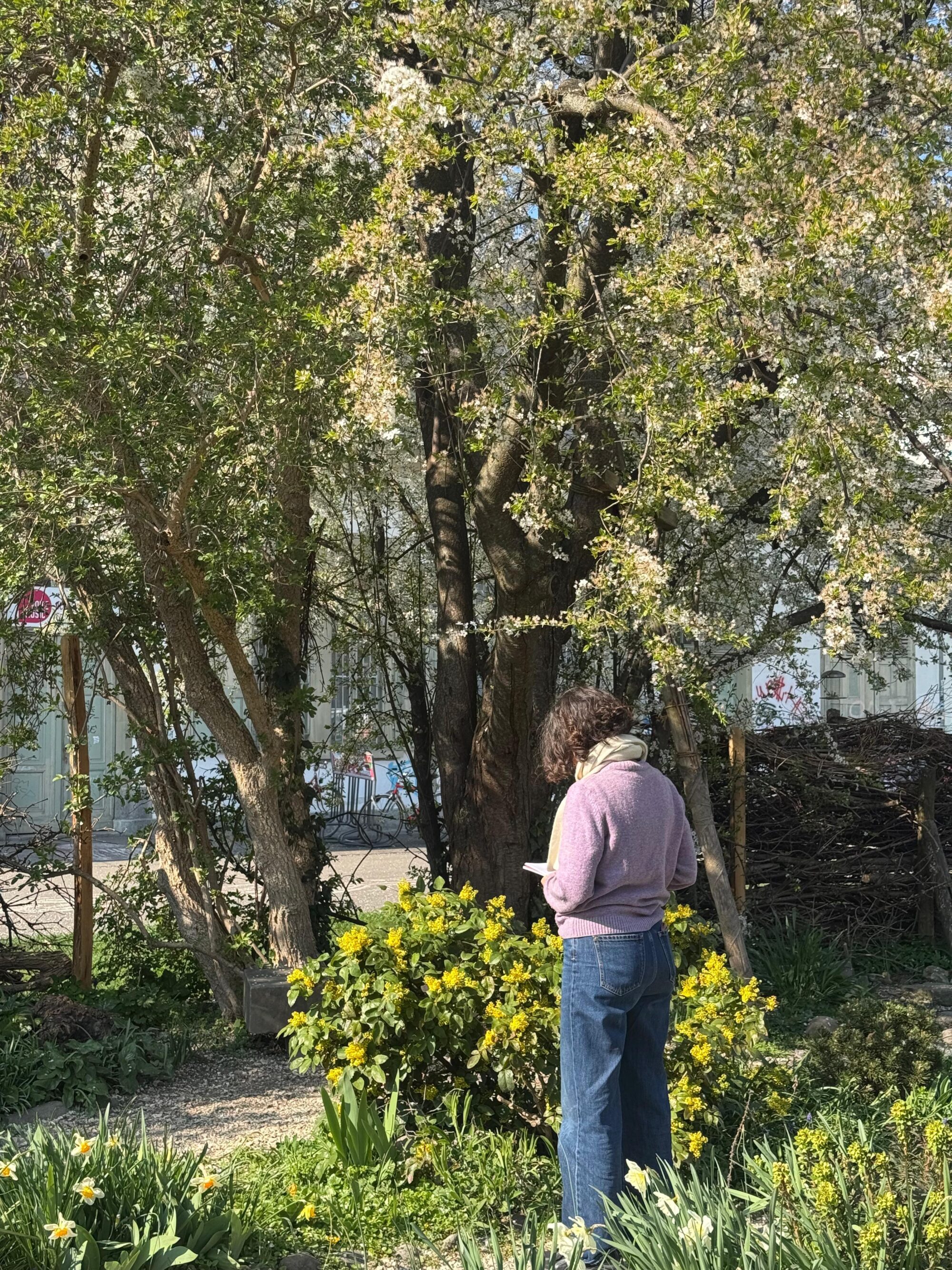
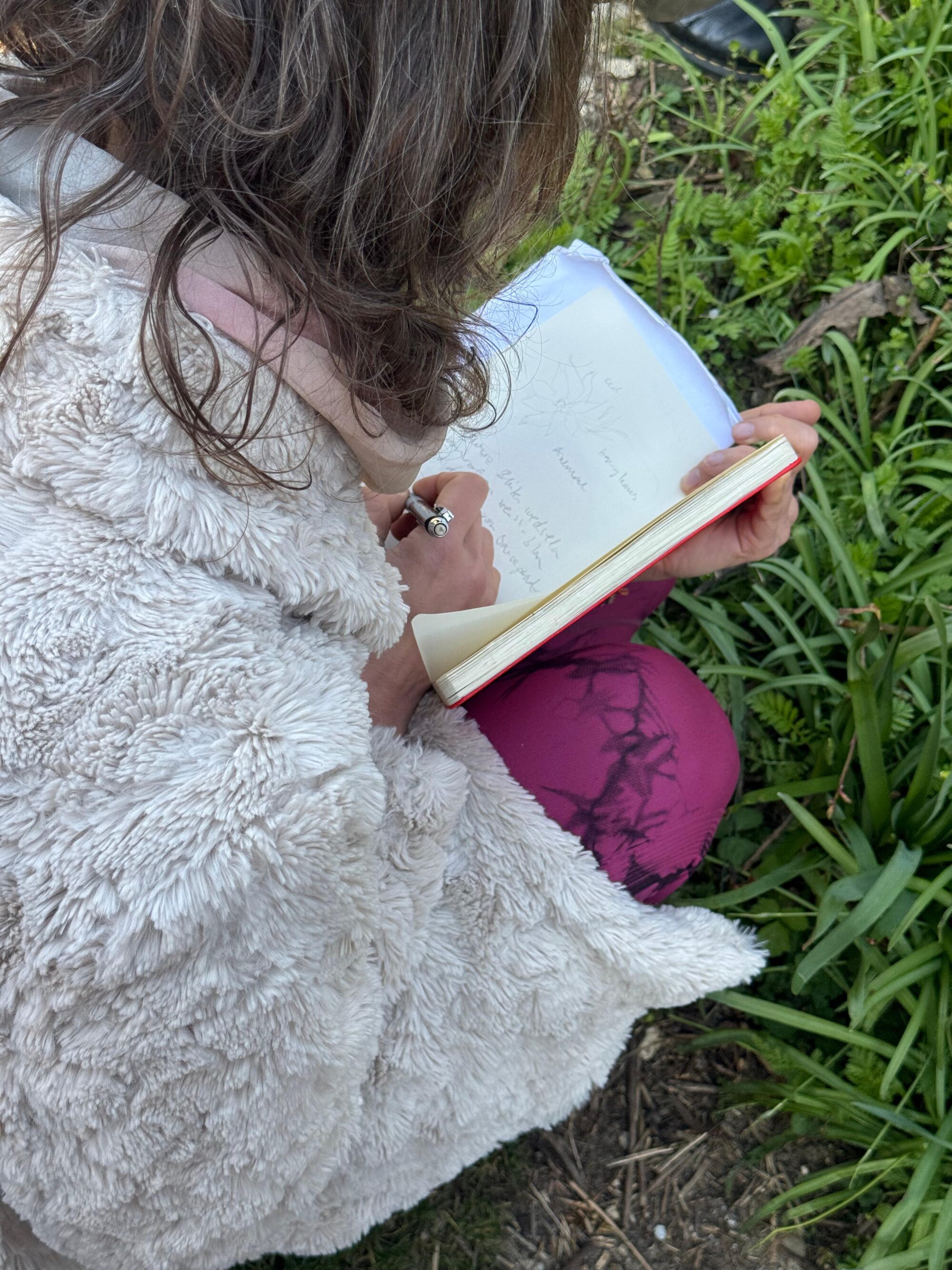
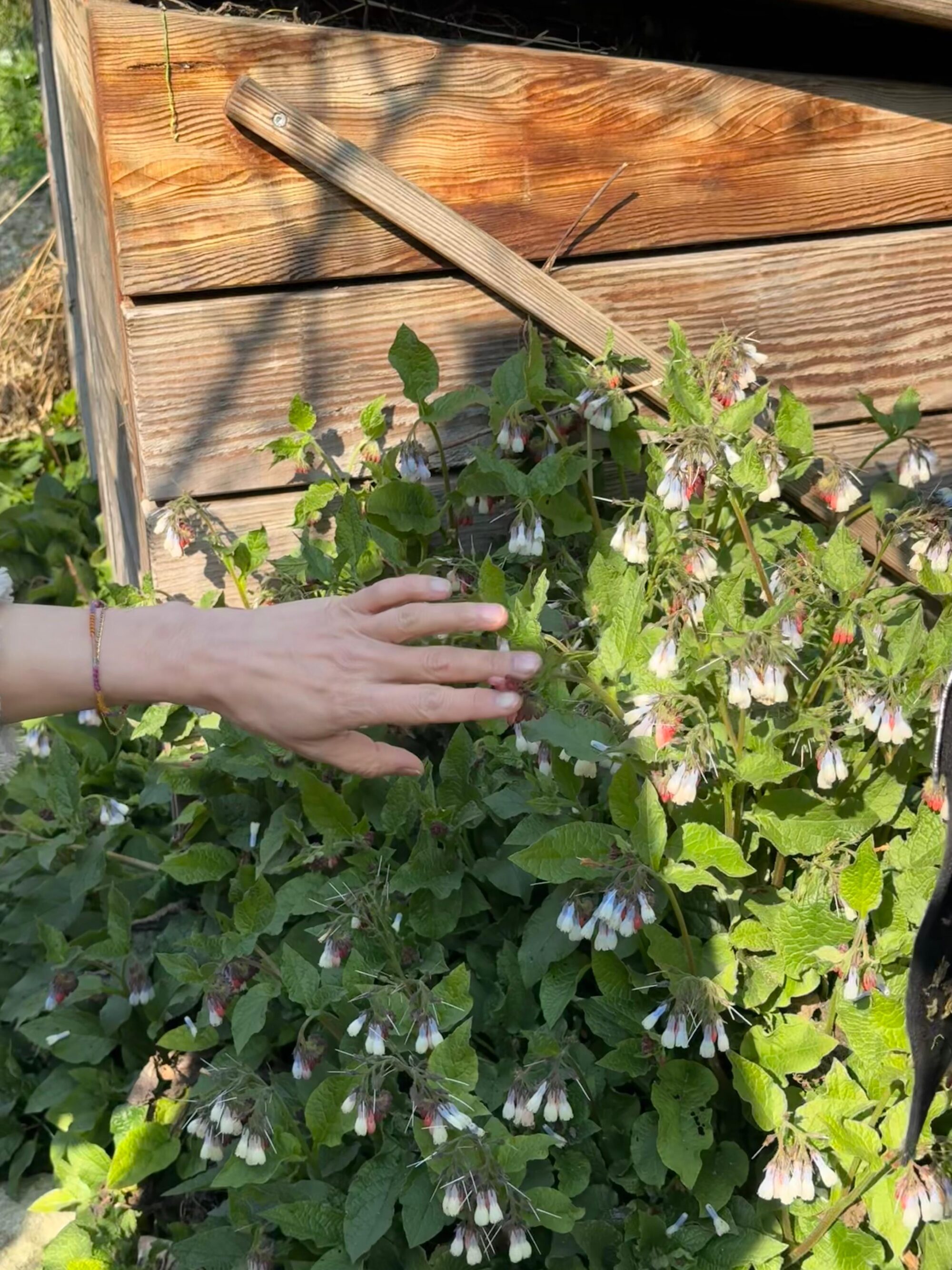
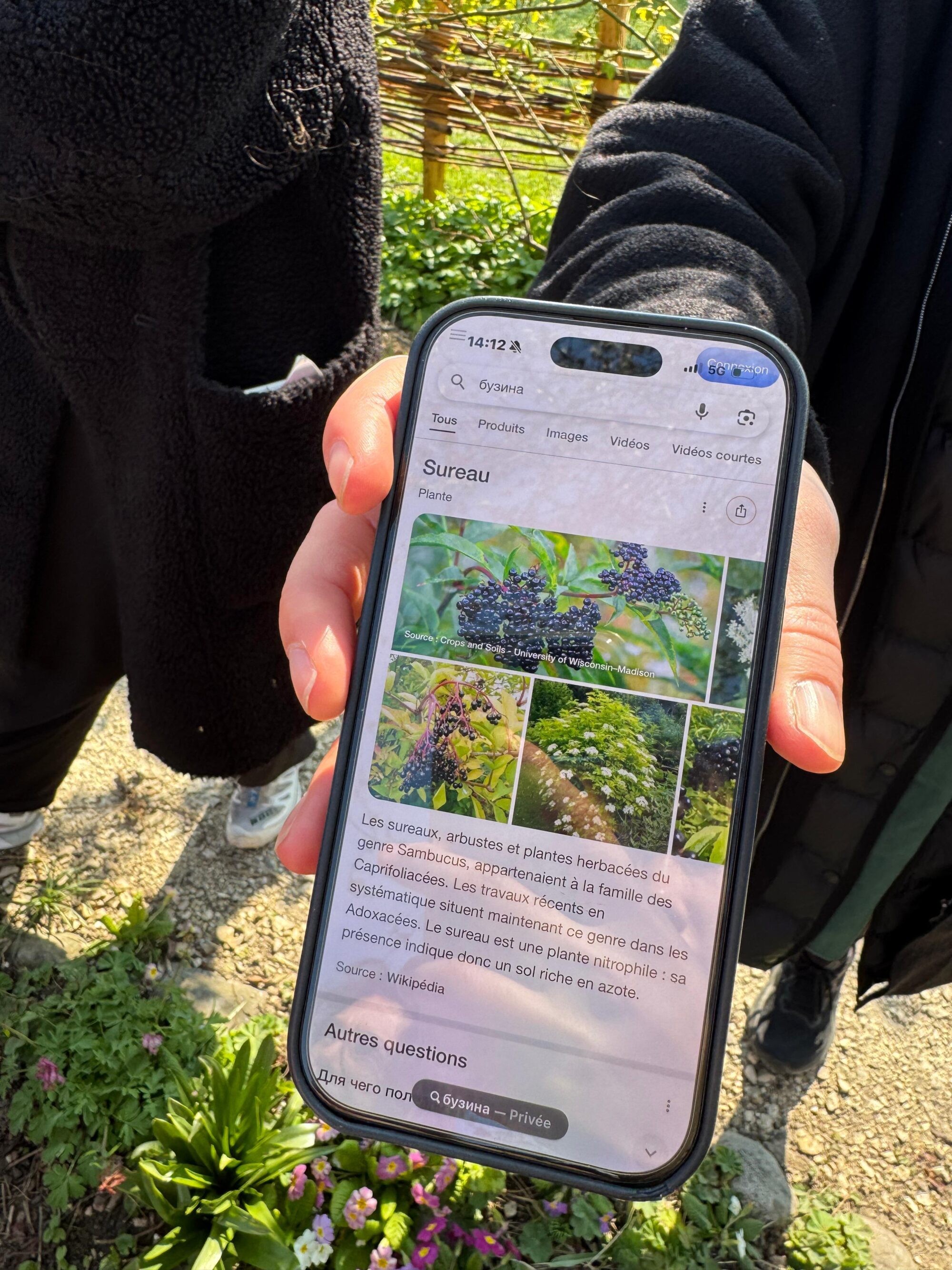
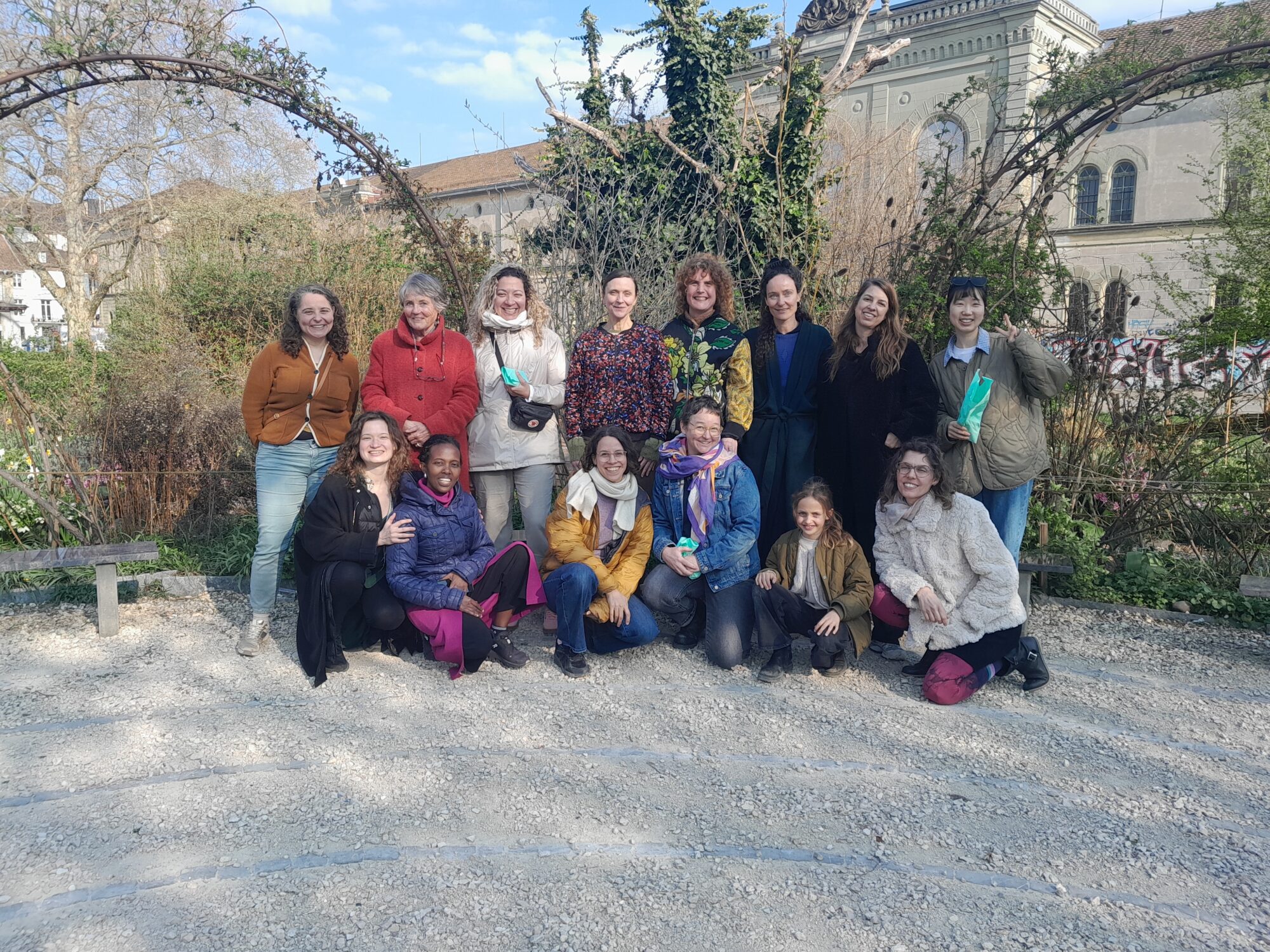
A sunny Sunday afternoon in March 2026 in Zurich: Thirteen participants, most of them practising artists, gathered at the Labyrinthplatz Zurich – a feminist project that has existed for over 30 years. The place describes itself as “a place of reflection, a reorientation in the present, a cultural model for forms of interaction and encounter in public space.” Here, Lera Lerner, an artist and curator with a socially engaged practice who emigrated from St. Petersburg to Paris, shared her knowledge as a doctoral plant geneticist. After a short introduction by Mara Züst, Lera Lerner guided the group through the plants native to the Labyrinthplatz. Along the way, she reflected on her artistic practice beyond institutional structures, and on the freedoms and constraints that come with it.
The participants engaged actively and attentively: they drew and took notes, laughed and exchanged ideas – both in group settings and in informal conversations. Through the sharing of knowledge and experience, connections were created across regions and generations.
Place and Year
Zurich, 2026
Participants
Meskerem Alaro, Nadja Baldini, Marilin Brun, Suzanne Dietler, Niculin Geer, Krispin Heé, Zuni Saule Jaques, Simone Koller, Wangqing Li, Corinna Mattner, Emanuelle Rapin, Molly Roškar, Malu Valerio
Facilitation
Lera Lerner
Project Management
Mara Züst (artasfoundation), supported by Sandra Suter (artasfoundation)
Partner Organisation
Labyrinthplatz Zurich
Financial Contribution
Canton of Zurich
Migros Culture Percentage
Art in Conflict – Practice #1 – Connecting Communities & Cultures
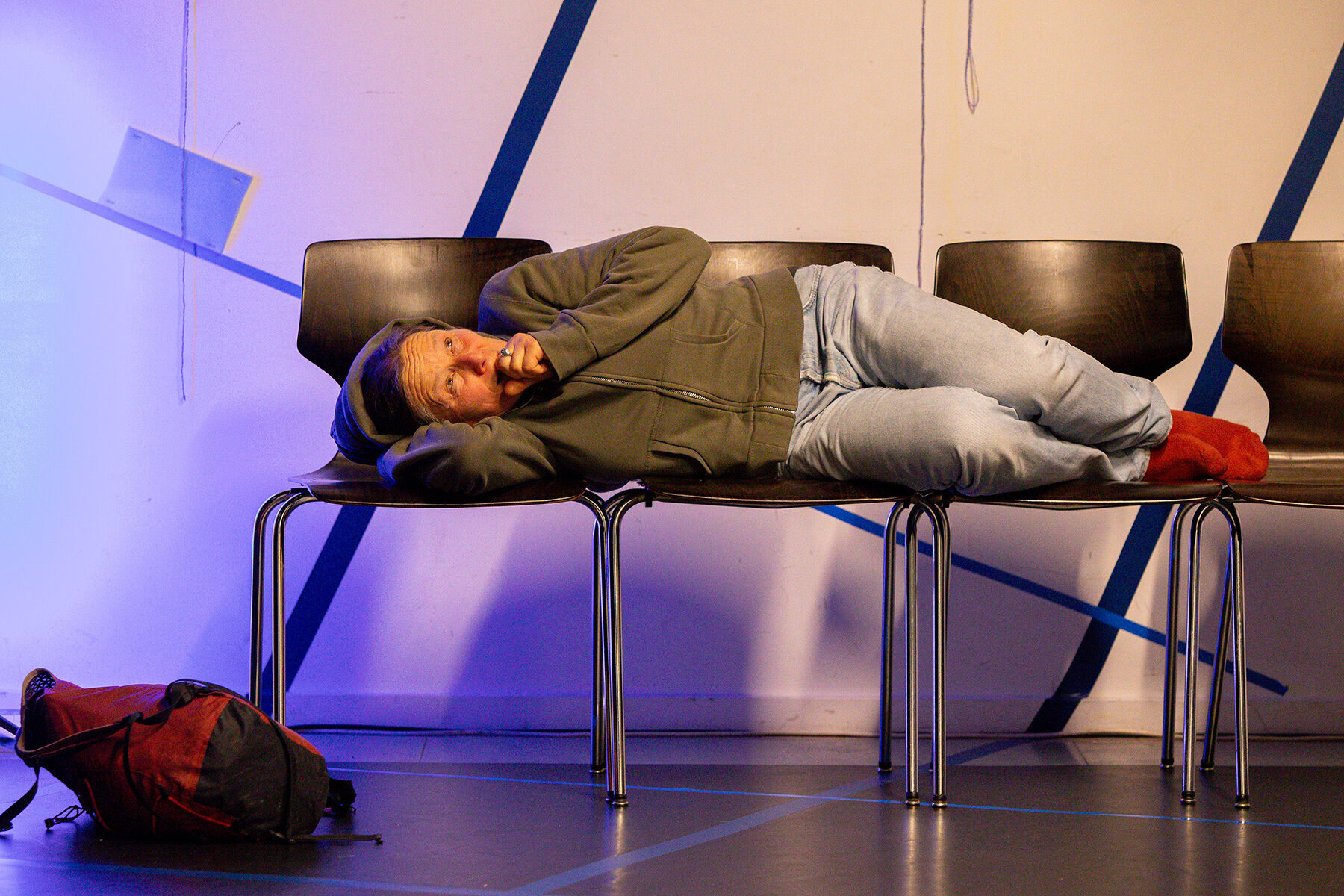
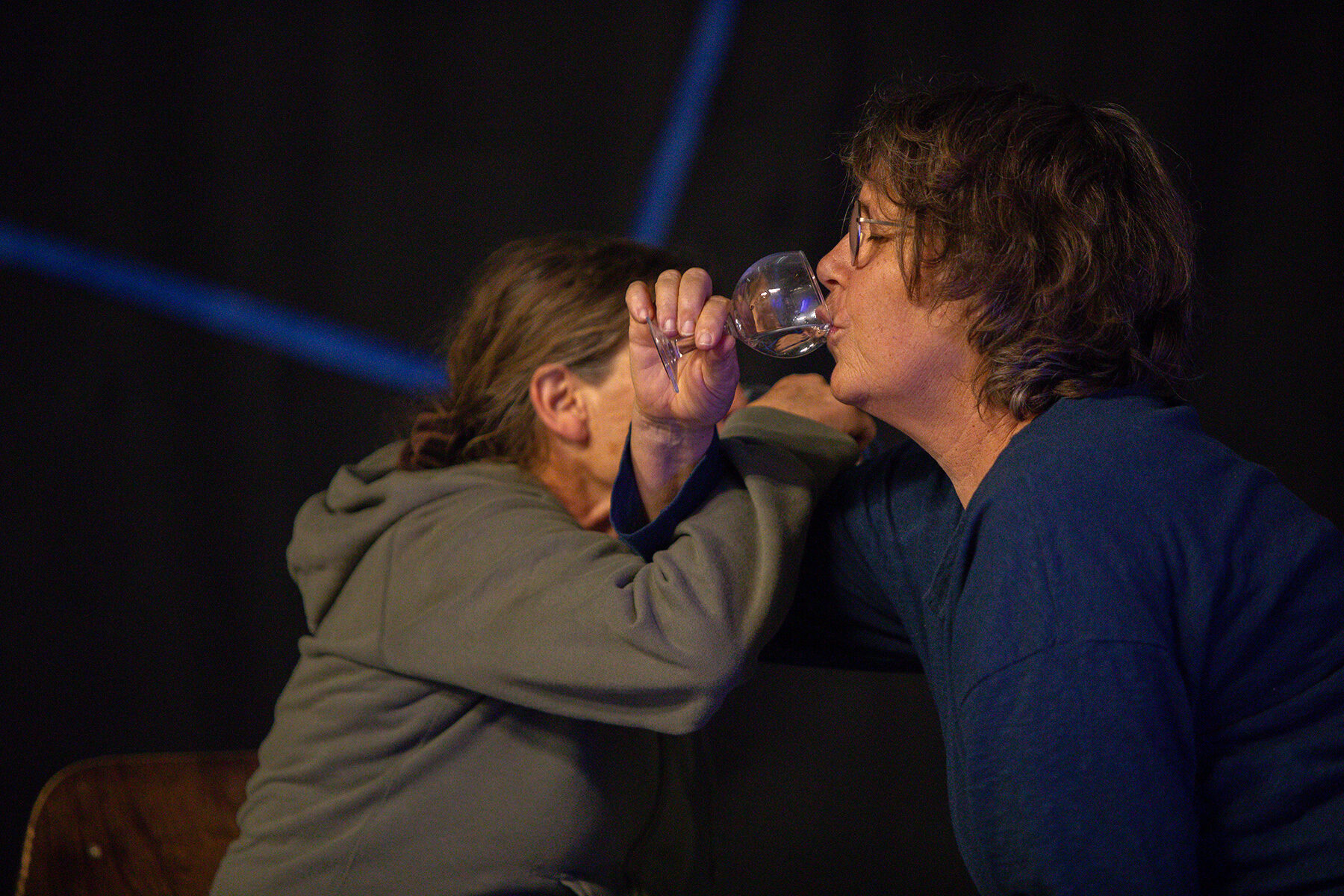
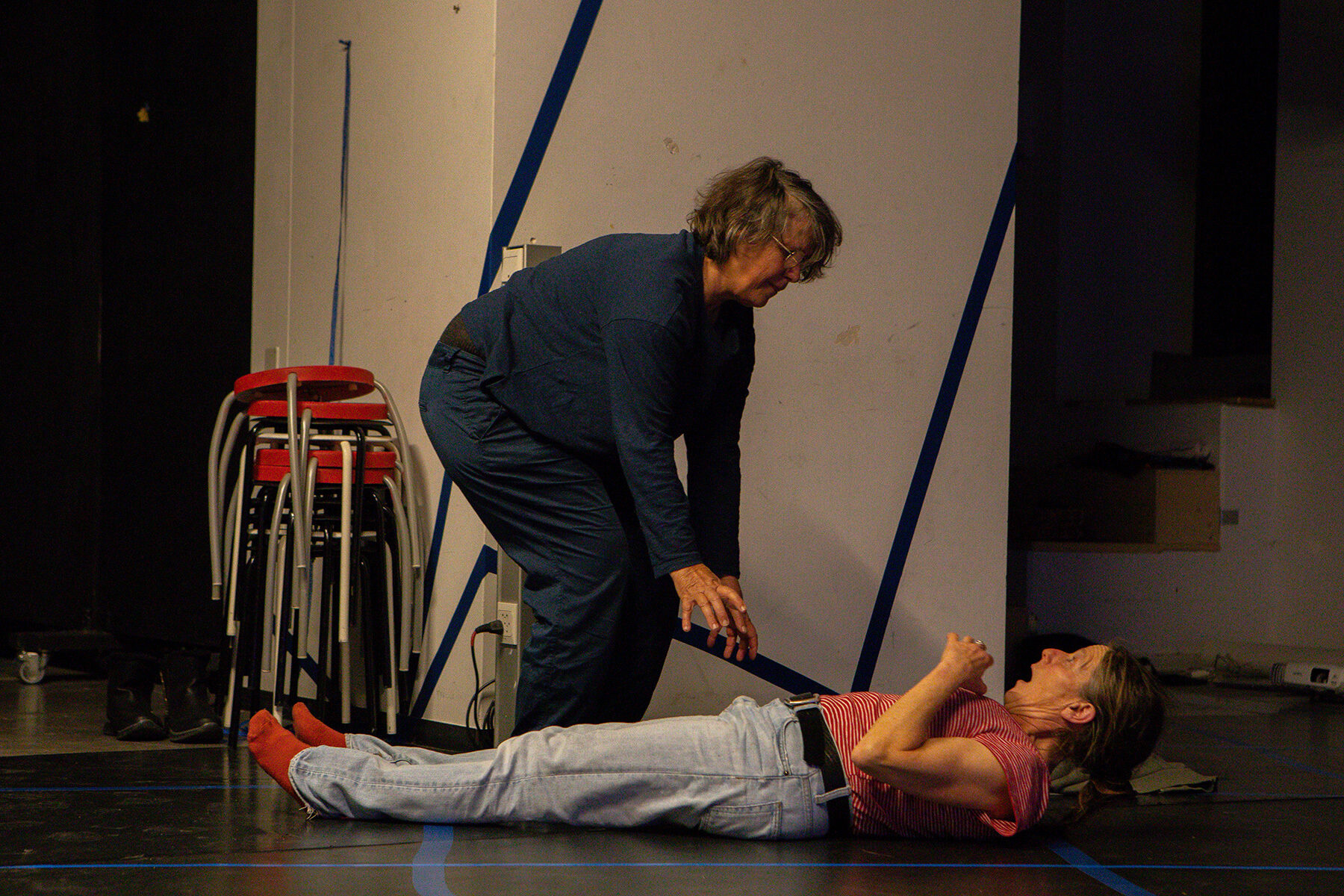
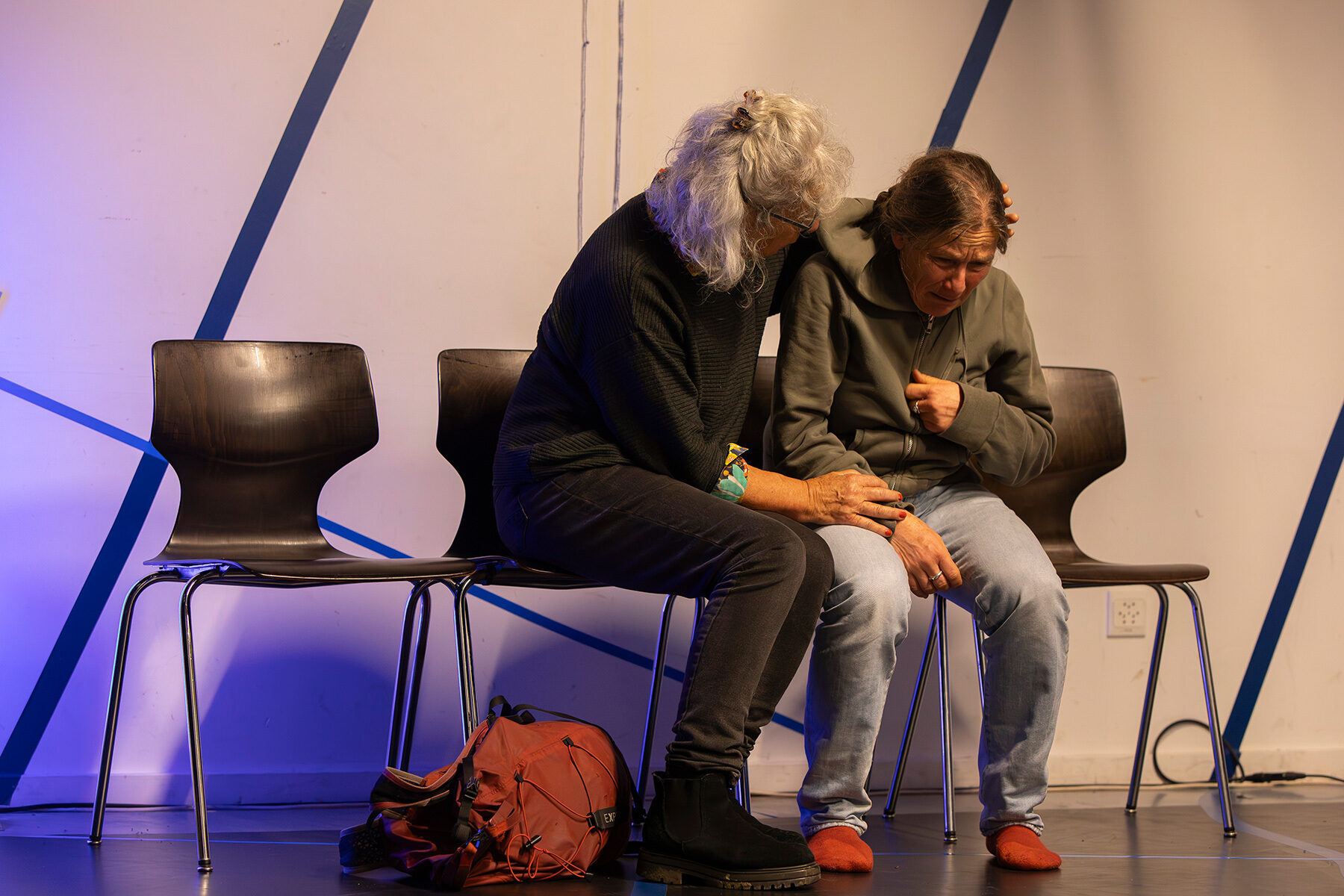
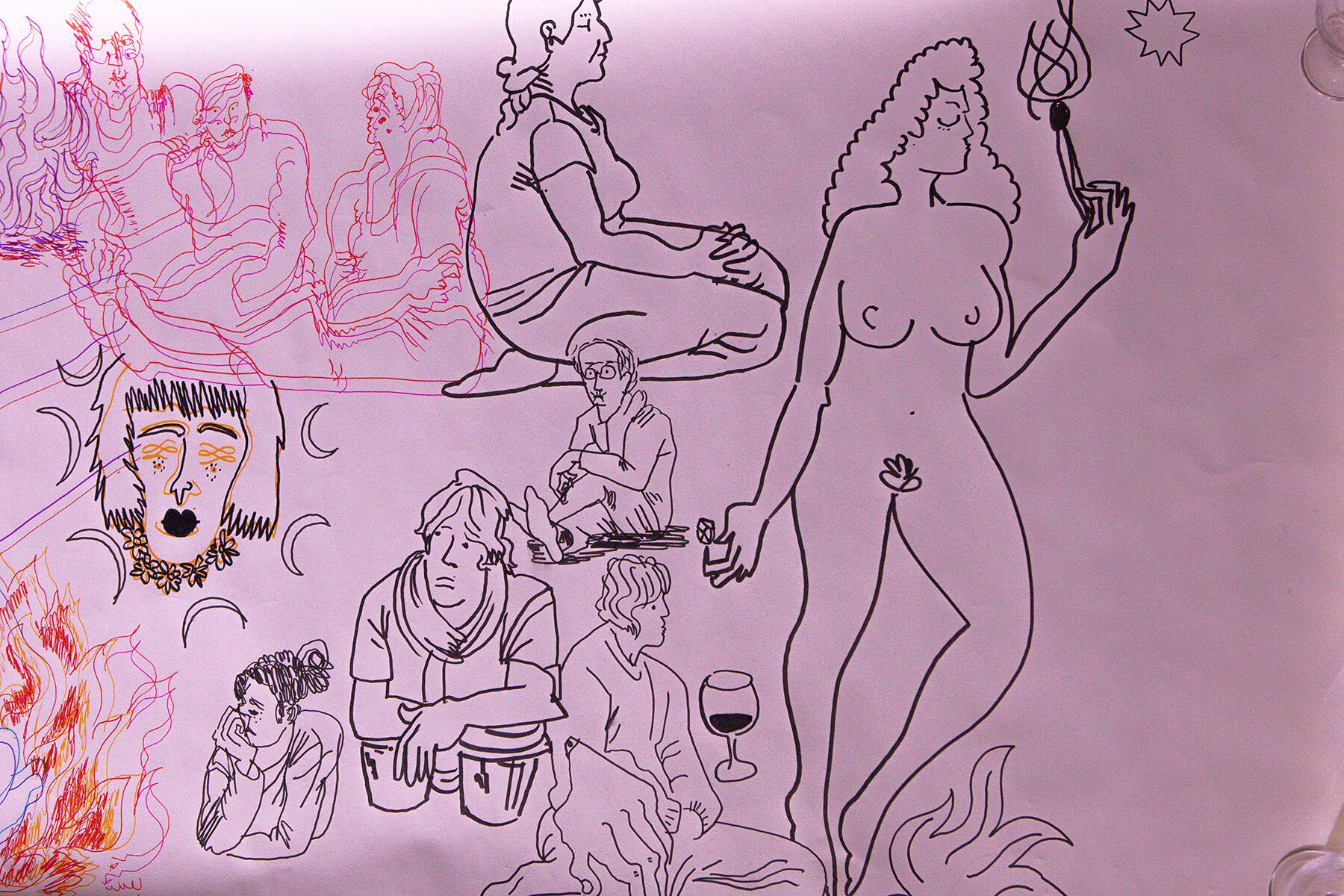
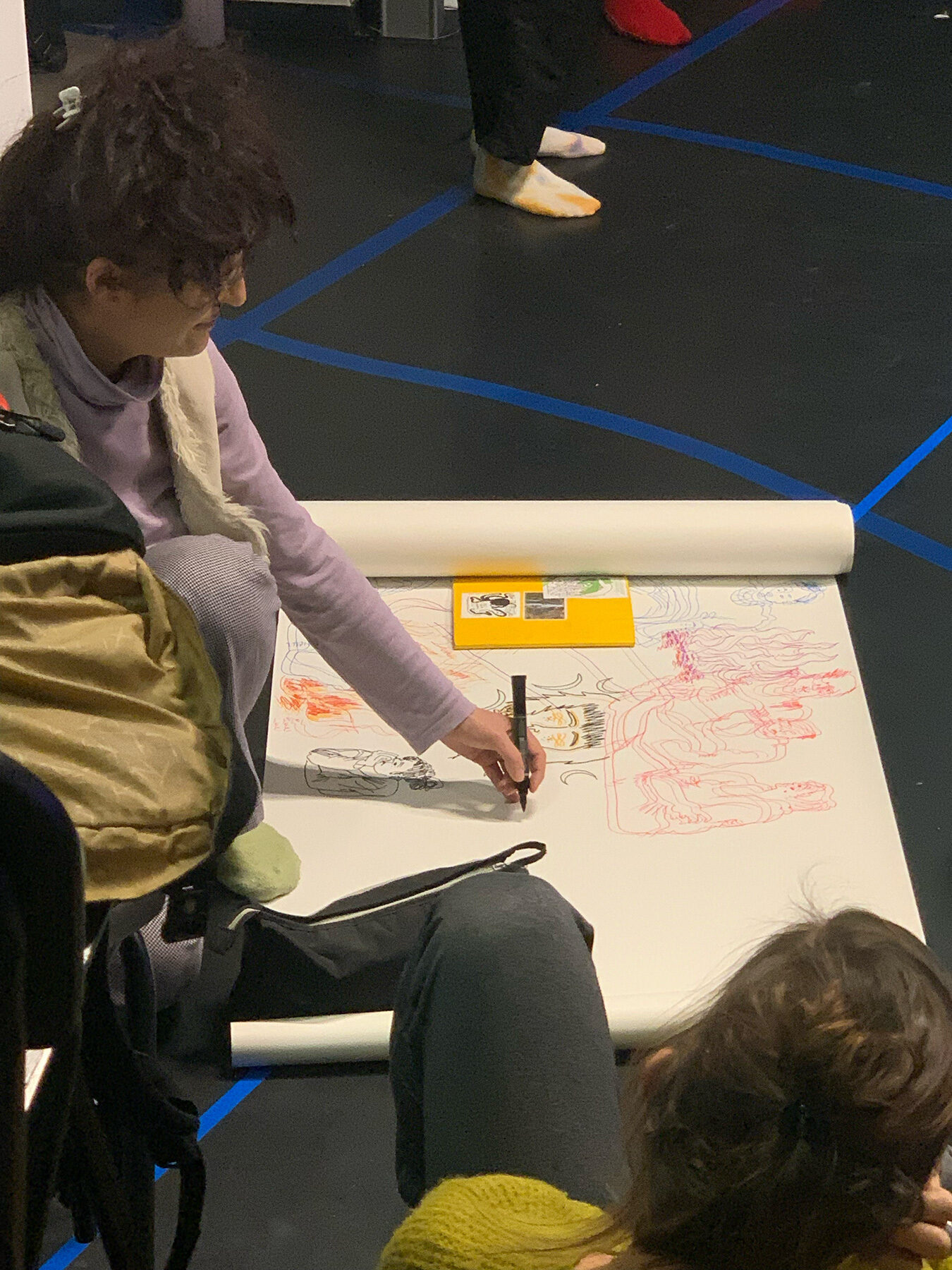
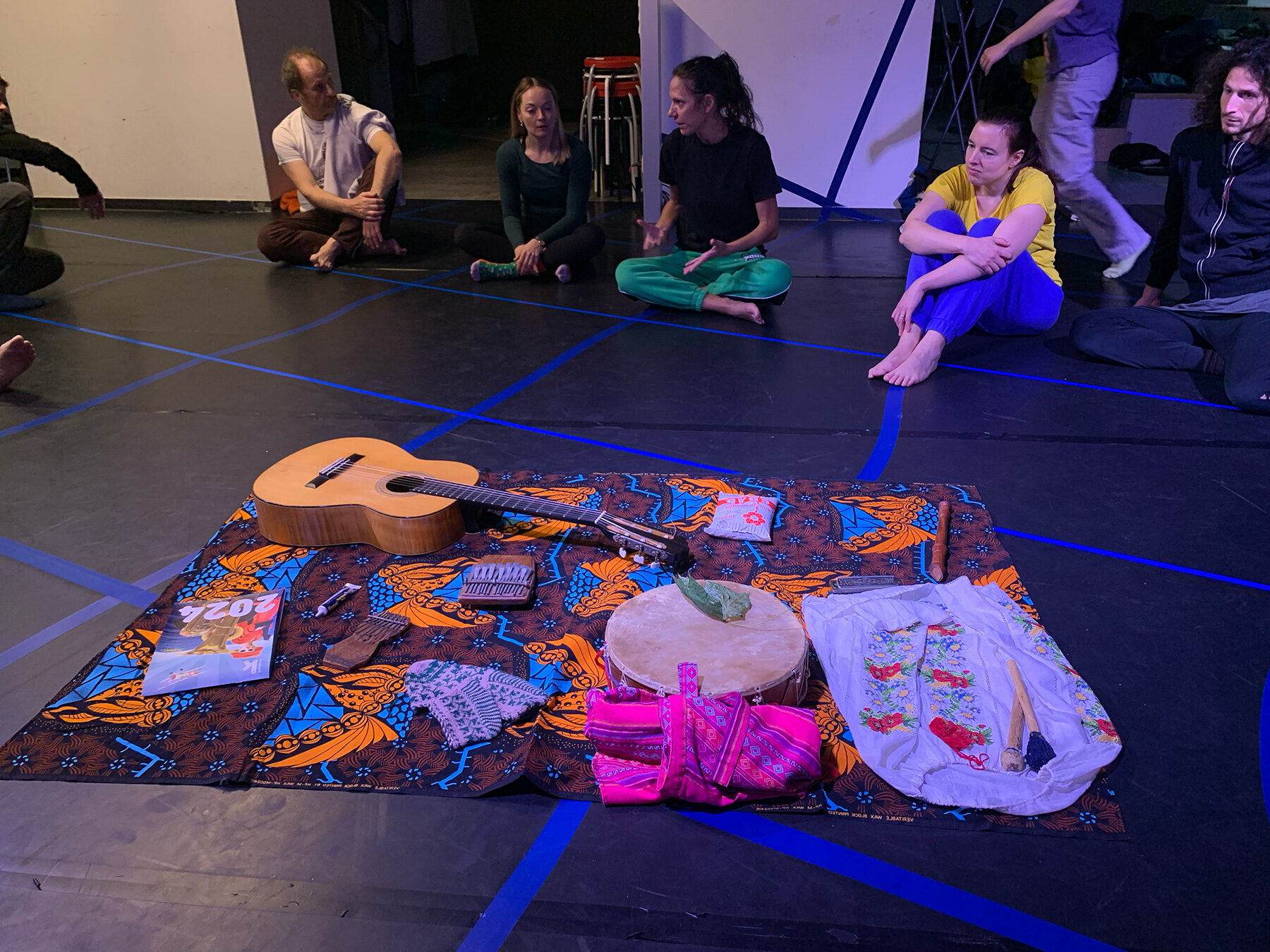
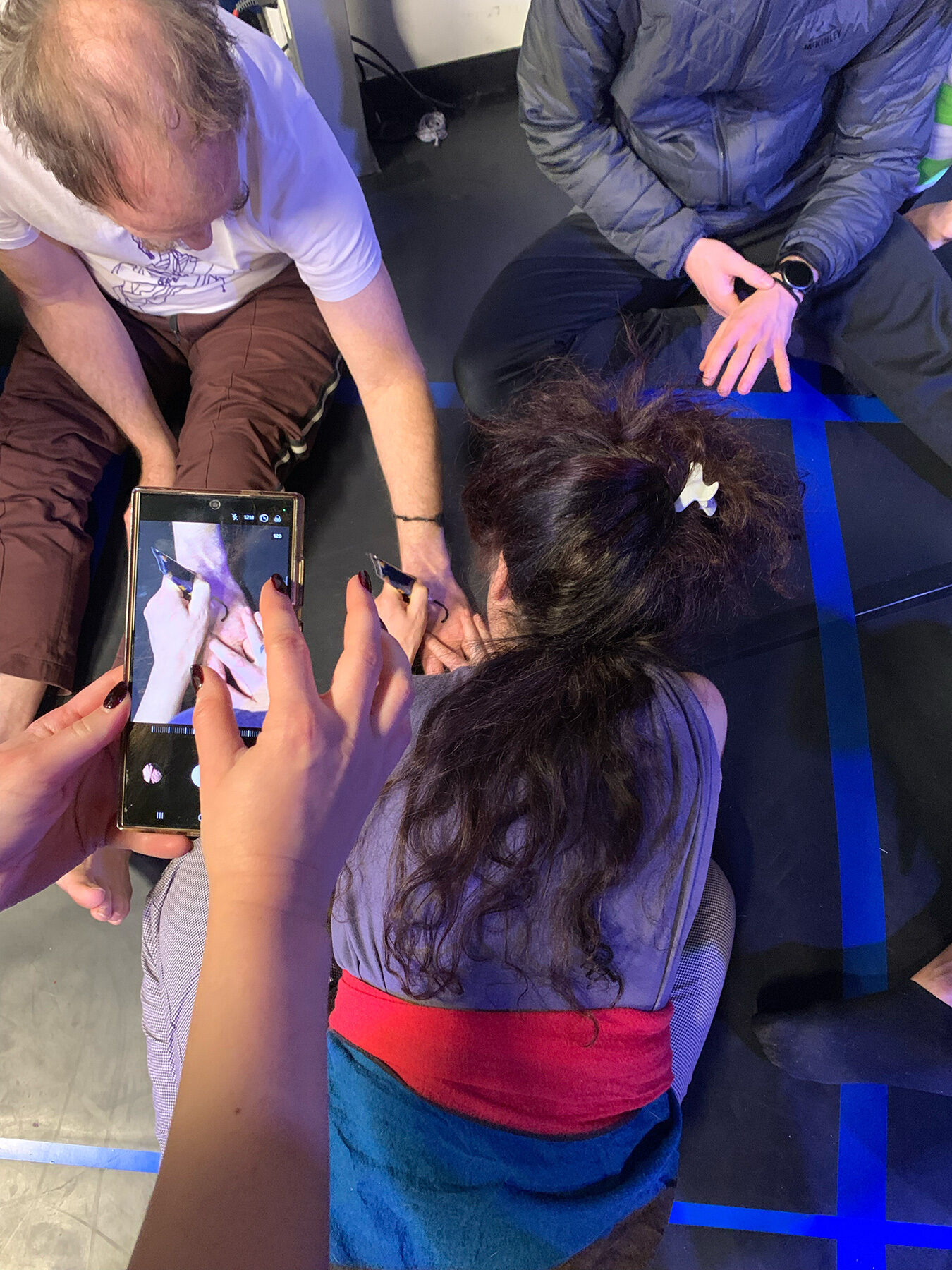
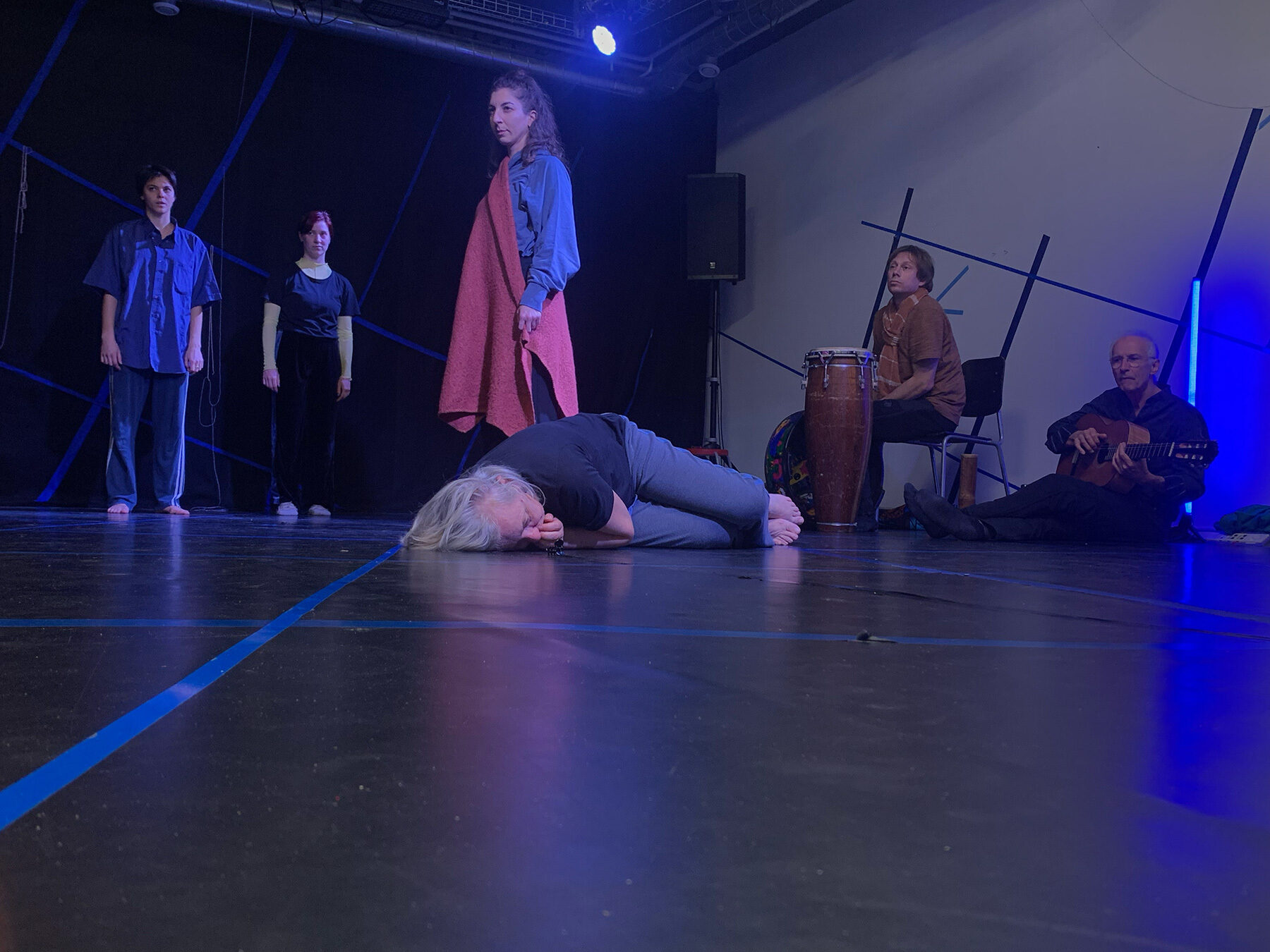
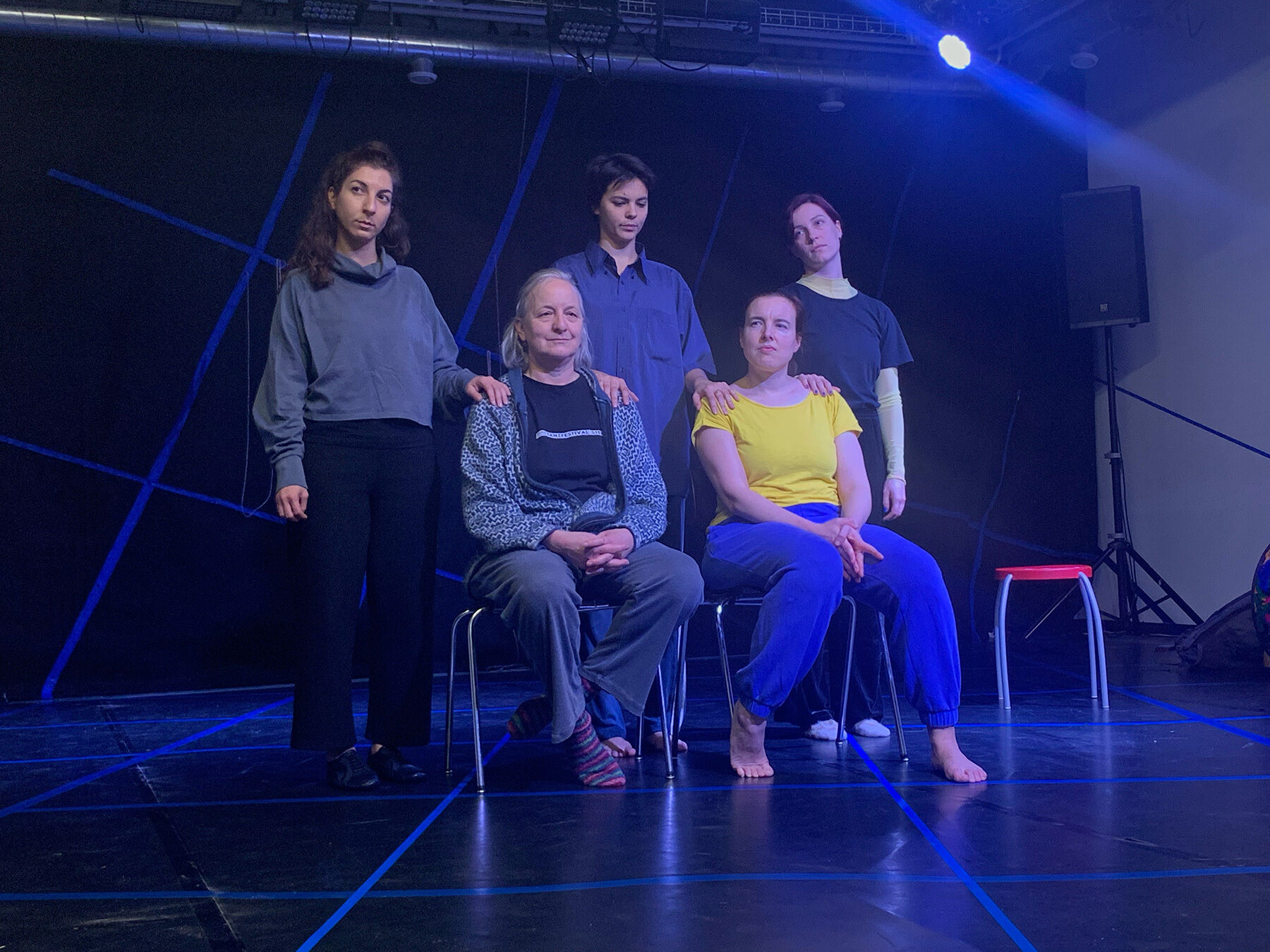
From 28. to 30. November 2025, our new practice format Art in Conflict – Practice took place in Zurich for the first time. Nineteen participants from theatre, dance, music, and community work gathered at Maxim Theater to explore various artistic methods of socially engaged art under the guidance of artist Chimène Costa. Drawing on their own stories, the group experimented with open methods such as psychodrama, storytelling, body awareness, Playback Theatre, and Augusto Boal’s Theatre of the Oppressed, while exchanging experiences from their work with vulnerable communities.
Through a wide range of songs and rhythms that participants taught one another, they engaged with the concept of “culture”: What do we bring into the space? What is already here? What tends to slip away? What do we connect to?
The sharing of stories, the exchange of experiences, opening up, and allowing fragility and vulnerability – all this nurtured connections and a growing sense of understanding among the people in the room. It became tangible how trust develops and provides a basis for collaboration and change, allowing them to make a difference together. Yet this requires time and presence, something we noticed repeatedly during the workshop. Art in Conflict – Practice creates a space in which a community of socially engaged artists can grow.
The workshop was documented and accompanied through drawing by artist Özlem Ünlü.
Place and Year
Zurich, 2025
Participants
Oleksandra Belyaevskaya, Lara Castro Maia, Yumio Chanoki, Duygu Dogru, Beatrice Ferrari, Christoph Frick, Fortunat Frölich, Jean-Daniel Girod, Maja Hess, Bettina Holzhausen, Sinje Homann, Maria Lobato, Katrin Oettli, Leide Olivera, Emeric Rabot, Anne Uphoff, Özlem Ünlü, Antolin Irene, Rana Yazaji
Facilitation
Chimène Costa
Project Management
Claudia Barth (artasfoundation)
Partner Organisation
Maxim Theater
Financial Contribution
Cassinelli-Vogel-Stiftung
Dr. Georg and Josi Guggenheim Foundation
Irene Foundation